
The short answer
Decide who owns the licence and data, how enquiries are assigned, what your team must record and what support is included before choosing a CRM.
Ownership and export
Confirm who contracts with the platform provider, who controls the account and how customer records can be exported when the arrangement ends. Ask what happens to automations, phone numbers, email domains and integrations if support changes. Check where data is stored and what access each party needs. Put the exit process into the proposal; a branded interface alone does not explain ownership or portability.
Working process
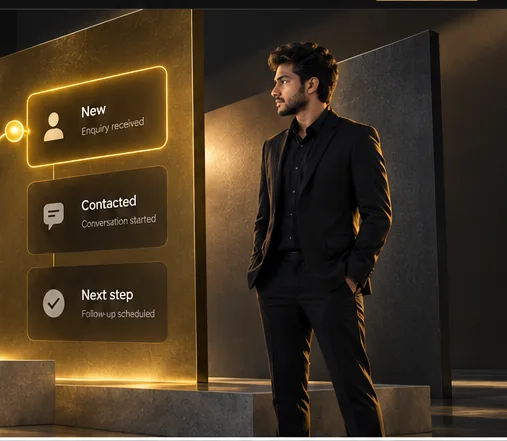
Define enquiry sources, assignment rules, pipeline stages, reminders and permissions before choosing screens or integrations. Decide which events staff must record and which can be automated reliably. Test who receives an enquiry when an owner is absent, how duplicate contacts are handled and when a follow-up becomes overdue. Keep the workflow small enough for the team to use consistently; a complex dashboard cannot repair an unclear responsibility.
Total scope
Separate licence fees, configuration, migration, training, integrations and ongoing support in the commercial scope. Confirm which features depend on the underlying platform and what may cost more as volume grows. Test a small process with synthetic records before moving real customer data, including assignment, reminders, permissions and export. Agree how errors will be reported and who will maintain the workflow after launch. A working demonstration is stronger evidence than a feature list.
Turn the guide into a practical next step.
Review the scope and questions for this service before deciding what support you need.
Explore the service