
What is included?
Define how an enquiry becomes a useful next conversation before selecting CRM screens. The proposed setup should make ownership, stages, reminders, access and reporting clear to the people using it.
Lead intake and assignment
Define where enquiries arrive, what information is needed and who receives them. Account for missed, duplicate and irrelevant enquiries without asking the customer to repeat sensitive details.
Pipeline and follow-up
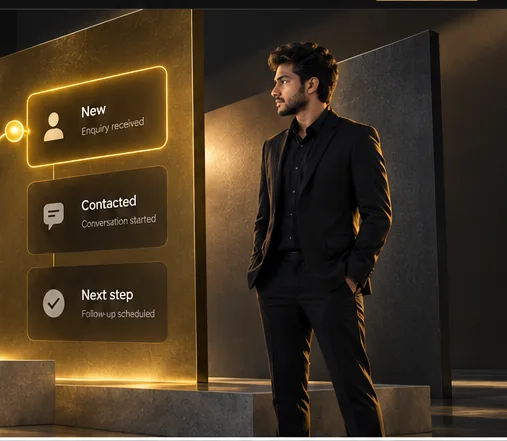
Map stages that reflect your real sales process, including qualification, proposal and next action. Set reminders only where they help someone do the work.
Roles and permissions
Decide who can view, edit, export and manage customer information. Approval, access and retention needs should be identified before migrating real records.
Reporting and handoffs
Choose measures that help the team act: response ownership, stage movement, unresolved follow-ups and qualified outcomes. Avoid dashboards that show activity without a decision.
Platform, data and support terms
Clarify the platform provider, licence ownership, third-party charges, data export, migration, support boundaries and what the business controls.
Built around your business
Your offer, customer demand and sales process shape the work. Explore the journey most relevant to your business.




From first conversation to review
Map the work
Describe the enquiry sources, team roles, current tools and missed handoffs.
Agree requirements
Define stages, assignment, permissions, reminders and reports before configuring software.
Configure and test
Set up an agreed pilot using synthetic records; verify roles and the steps team members actually take.
Migrate and hand over
Only after review, plan the controlled migration, training and ongoing support responsibilities.
Is this the right fit?
The scope should match your starting point, your team’s capacity and the decision you need to make.
- Enquiries are arriving but ownership or follow-up is inconsistent.
- Your team can agree a workable sales process and data responsibilities.
- Licensing, export and support arrangements can be reviewed before commitment.
What we measure
A configured pipeline is useful only if team members can follow it.
- Assignment and unresolved enquiry visibility.
- Stage changes and follow-up completion.
- Qualified outcomes where reliable sales feedback exists.
What shapes the investment?
A proposal separates the work from media spend and third-party software. These factors help define a realistic scope.
- Users, permissions and workflow complexity.
- Data migration and third-party integrations.
- Licensing model, training and ongoing support.
Before you commit
The software provider and licence terms must be confirmed for each engagement.
No claim is made that Gurushesh owns the underlying CRM platform.
Existing customer data requires a separate migration and privacy plan.
Frequently asked questions
Is this a custom CRM built from scratch?
That depends on the agreed offer and technical scope. A white-label platform, configuration work and a custom build carry different ownership, support and cost implications. The proposal must name the model being offered.
Who owns our customer data?
Ownership, access, retention and export must be agreed before using a platform. The business should understand what the platform provider stores and what happens when a subscription or working relationship ends.
Can you migrate our existing contacts?
Migration can be scoped after reviewing the source, data quality, permissions and consent basis. Synthetic records should be used during configuration testing; real records move only through an agreed protected process.
Will we need a subscription?
A white-label service may involve platform licences and other third-party charges. Those costs, the service fee and any migration or support charges must be made clear before commitment.
What if our sales process changes?
Pipeline stages and reminders can be reviewed as the business learns. The implementation should document which settings your team controls and which changes require additional support.