The work
What the engagement can include.
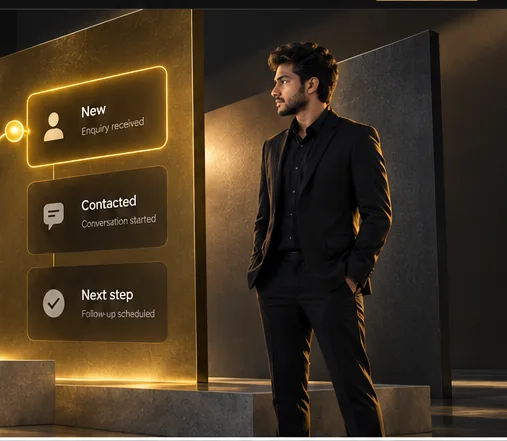
Pipeline and ownership design
Define lead sources, assignment rules, stages, required fields and the conditions for moving a record. Keep enquiry, qualified opportunity and customer as separate concepts so the reporting has a useful meaning.
Integrations and follow-up controls
Specify which website, advertising and communication systems need to exchange information. Document permissions, failure handling and human approval points before enabling automated messages or data transfer.
Migration, access and reporting
Agree field mapping, duplicate rules, role permissions, exports and retention. Plan a synthetic migration and recovery check. Reports should explain stage progression and missed next actions without exposing private customer information.
How we work
From the business question to the next decision.
Map the working process
Interview the owner and users about intake, assignment, qualification and follow-up. Record current exceptions rather than forcing them into a tool demo.
Configure and test
Implement an agreed workflow in the selected platform, using synthetic records to check permissions, integrations and failure states.
Train and refine
Hand over role-specific tasks, review adoption and adjust the workflow where the team’s real work differs from the original map.
Is this the right fit?
- Your enquiries arrive from several sources and ownership is unclear.
- You can name the people who will use and maintain the workflow.
- You want platform licensing, data control and integration charges explained before committing.
Useful evidence
What to measure and review.
Use workflow records to understand follow-up quality without inventing revenue attribution.
- Enquiries assigned to an accountable owner with a recorded next action.
- Overdue follow-ups, duplicate records and missing qualification information.
- Progression through agreed stages where the team maintains reliable records.
What shapes the scope and investment?
- Selected platform, licences and number of roles or users.
- Integrations, data migration and automation complexity.
- Training, support and ongoing administration responsibilities.
Before the work starts.
White-label does not automatically mean ownership of the underlying software or unrestricted customisation.
Platform selection, data processing and paid providers require explicit agreement; no vendor stack is assumed.
Common questions
Questions before you choose.
Will I own the CRM software?
That depends on the selected licence and agreement. Clarify software ownership, branding rights, data export, renewal costs and what happens if the subscription ends before a sales commitment.
Can it connect with any CRM or advertising platform?
Compatibility must be checked for the actual systems and permissions. An integration needs a supported data route, field mapping, error handling and testing; it should not be promised solely because an API exists.
Can follow-up be fully automated?
Some routine tasks can be automated after the workflow is agreed. Sensitive decisions, consent, exceptions and customer conversations still need explicit rules and human ownership.